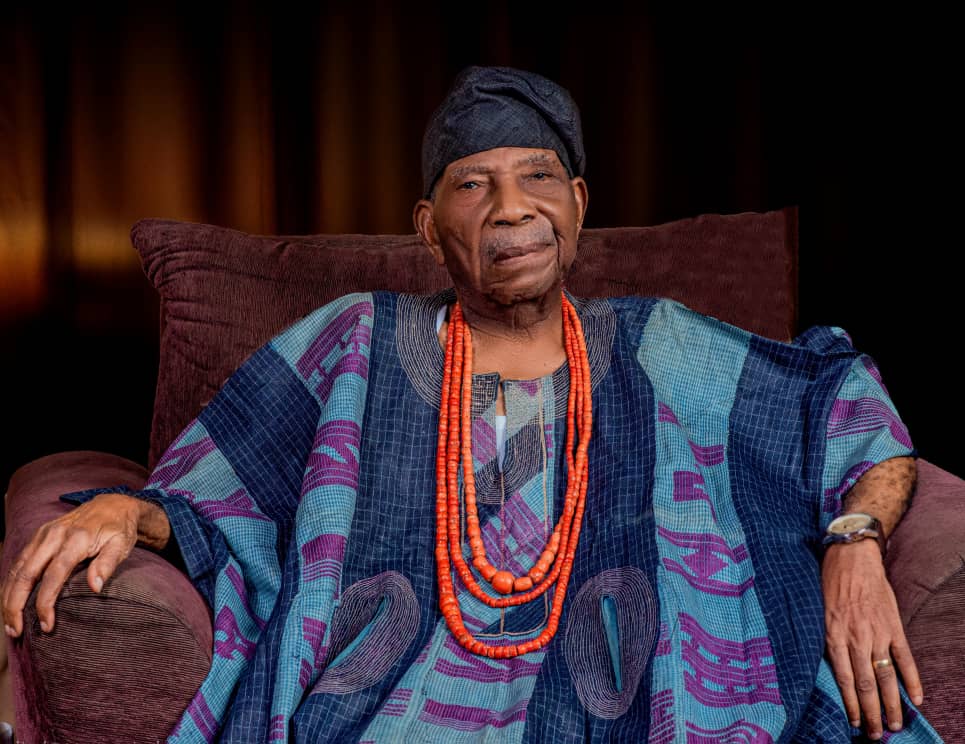
Pa Reuben Fasoranti, the late elder statesman and former National Leader of the Pan-Yoruba socio-political organization Afenifere, was ancestrally a native of Akure, despite lingering historical debates, according to a high-ranking local chief.
High Chief Oladimeji Reuben Abitogun, the Odopetu of Ayede-Ogbese in the Akure North local government area of Ondo State, strongly defended the late leader’s lineage in a recently published interview, directly challenging assertions that Fasoranti’s roots traced back to Owo.
The debate surrounding Fasoranti’s lineage hinges on differing definitions of Akure nativity.
According to Abitogun, while some locals narrow the definition to specific central territories, the true historical and ancestral boundaries of Akure stretch from Use-Eda to Igan-on, encompassing areas like the Gbagi Axis and the bypass.
To trace Fasoranti’s deep-rooted connection to Akure, Abitogun outlined a family history spanning several generations, beginning with the migration of the Asodeboyede lineage.
Upon arriving in Akure, the group established its authority, and the Odopetu leadership accommodated the emerging order, making land concessions to foster community growth.
Family oral history dictates that an ancestor named Famude, an Akure native, settled in Uso, where his family was later captured during an era of slave raids.
While many family members were permanently displaced, a surviving child named Famusude was enslaved in the palace of the Ologba of Oda.
Famusude eventually escaped the palace, returned to Akure, and reunited with his father in Uso.
Famusude later had children, among whom was Fasoranti, the father of Pa Reuben Fasoranti.
“Pa Fasoranti was ancestrally a native of Akure,” Abitogun stated, dismissing claims from counter-factions as a fraudulent attempt to erect artificial boundaries within ancestral communities.
Beyond his lineage, Fasoranti was remembered by Abitogun as a highly disciplined, principle-centered leader who remained fiercely loyal to his political convictions, a trait the chief noted is increasingly rare among modern politicians.
Fasoranti’s legacy is defined by his commitment to free education, welfare programs, and the progressive development of the region, solidifying his stature as a towering figure in Nigerian socio-political history.