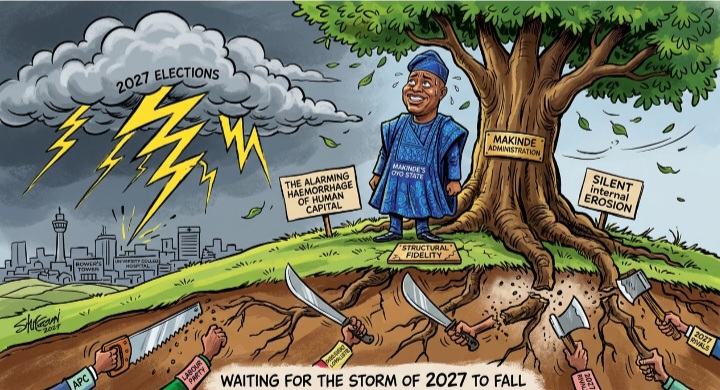
In the twilight of his turbulent reign, King Richard II of England stood as a monarch in name only. As chronicled in historical annals, Richard ruled with an increasingly insular autocracy, systematically alienating his broader coalition of noblemen, advisers, and traditional allies through rigid miscalculations.
Believing his position was inherently secure, he pushed away the very architects of his power. When his disaffected cousin, Henry Bolingbroke, finally returned to challenge the crown, Richard looked around for his formidable army and loyal lords, only to discover that they had silently drifted away, defecting to the opposition. Richard’s authority was not conquered by an overnight invasion; it had evaporated through months of internal hollowing.
By the time the final political storm arrived, he stood completely isolated, a grand king whose structural roots had already been severed by his own miscalculations.
This historical tragedy offers a perfectly aligned paradigm for the current predicament of Oyo State Governor Seyi Makinde.
The architecture of political power is rarely destroyed by a singular, cataclysmic blast; more frequently, it succumbs to this exact brand of silent, insidious erosion.
Once perceived as an unassailable titan of the Pacesetter State, Makinde’s administration is currently experiencing a precipitous and alarming haemorrhage of human capital.
The relentless, day-to-day resignation of key political appointees and staunch loyalists is no longer a series of isolated, idiosyncratic departures. It is a full-blown exodus that signals an acute leadership vacuum and a comprehensive collapse of internal confidence from those who once worked closest with him.
The most damning indictment of this waning authority manifested in spectacular fashion following the official resignation of his former Chief of Staff, Otunba Segun Ogunwuyi.
While his departure from the cabinet was a heavy blow in its own right, his subsequent appearance at the formal unveiling of APC Senator Sharafadeen Alli’s manifesto in Ibadan shattered any lingering illusions of enduring loyalty to the governor’s camp. For a former right-hand man, the very custodian of the administration’s bureaucratic and political secrets, to pivot so decisively and hobnob openly with the vanguard of the opposition is an act of calculated, symbolic defiance.
It illustrates a devastating reality: those who have operated the gears of the Makinde machine have lost faith in its destination.
Alongside Ogunwuyi, high-profile figures have steadily abandoned ship, turning the state infrastructure into a revolving door of disaffection.
This systematic hollowing out of the administration evokes a stark botanical analogy. Governor Makinde stands today like a grand, solitary tree whose subterranean roots are being meticulously cut one by one.
Outwardly, the canopy may still look expansive and formidable, but beneath the soil, the stabilising network of loyalty, shared vision, and structural fidelity has been entirely compromised.
When a tree is stripped of its anchorage, it does not require an earthquake to cause its demise.
It awaits only the inevitable, gale-force winds of the 2027 general elections to effortlessly topple its hollow frame. Much like Richard II, Makinde’s insular management style has transformed his political fortress into a fragile house of cards.
As the roots continue to snap in rapid succession, the governor must look upon the lessons of history and recognise the writing on the wall: an elite that abandons its leader in the calm of the afternoon will assuredly watch him fall when the storm of 2027 finally arrives.