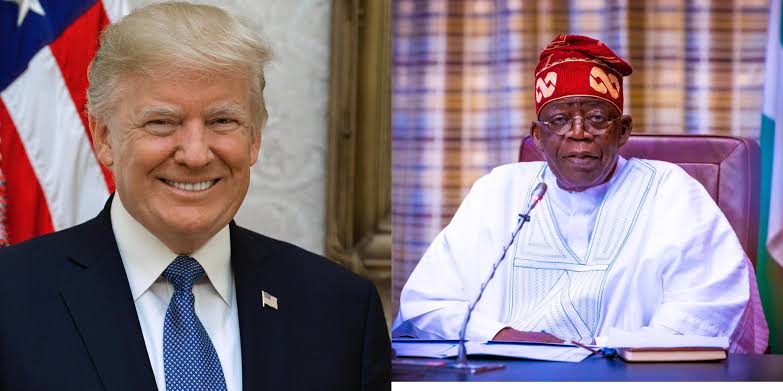
President Trump’s recent statements hinting at a possible military intervention in Nigeria should alarm every Nigerian who cherishes sovereignty and peace.
The brutal violence sweeping across Nigeria today cannot be entirely attributed to religion. In the web of Nigeria’s insecurity, both Christians and Muslims have suffered at the hands of Boko Haram, bandits, and other criminals tormenting innocent members of the public. It is reckless and misleading to interpret these atrocities through a religious prism.
Indeed, many predominantly Muslim communities have endured some of the most savage and merciless massacres in the northeast and even some other states in the North. Those killing their kinsmen in the Southeast are not doing so because of religion but for agitation. Even in the Southwest, where we can say there is relative peace, those engaging in kidnapping, armed robbery, and ritual killing are equally not doing so because of religion.
So, exploiting religion as a justification for intervention will only deepen divisions and foster further instability.
Historical precedent reveals a grim pattern of U.S. military interventions that leave ruin in their wake far from its own borders. The cases of Iraq, Libya, and Afghanistan starkly illustrate how foreign military involvement rarely yields peace but rather chaos, institutional collapse, and protracted conflict.
Nigeria, as a nation, must resist becoming another casualty of a playbook masquerading as “help.”
Beneath the surface, such interventions often aim to exploit the nation’s abundant natural resources while eroding its sovereignty.
If the United States genuinely cares about Nigeria’s well-being, it should prioritize non-military cooperation that builds internal capacity. Technical assistance to enhance local security agencies, intelligence collaboration, and investments in socio-economic development, especially poverty reduction efforts, will prove far more effective and respectful of Nigeria’s independence.
Addressing fundamental issues through education, infrastructure, and healthcare support strikes at the roots of insecurity. Diplomacy and multilateralism, grounded in respect for Nigeria’s self-determination, must form the foundation of any partnership.
On the other hand, the Nigerian government must confront its severe shortcomings in security management and social inequality. Rampant poverty and growing economic disparities breed the desperation exploited by mercenaries and bandits. Without bridging the vast gulf between the affluent elite and the masses, insecurity will only intensify. Additionally, corruption and collusion must be eradicated; those benefiting from violence must face justice impartially and without delay.
The state must adopt a proactive, strategic posture—not a reactive one—to protect its citizens and dismantle the networks enabling violence.
In sum, the idea of U.S. military intervention in Nigeria is a perilous gamble disguised as assistance.
Nigerians and the global community alike must reject these imperialistic impulses that risk pushing Nigeria deeper into chaos.
Genuine support respects sovereignty, tackles systemic poverty and inequality, and fosters nation-building without imposing foreign troops on Nigerian soil.