By Temitope Ejimokun/Joan Nwagwu
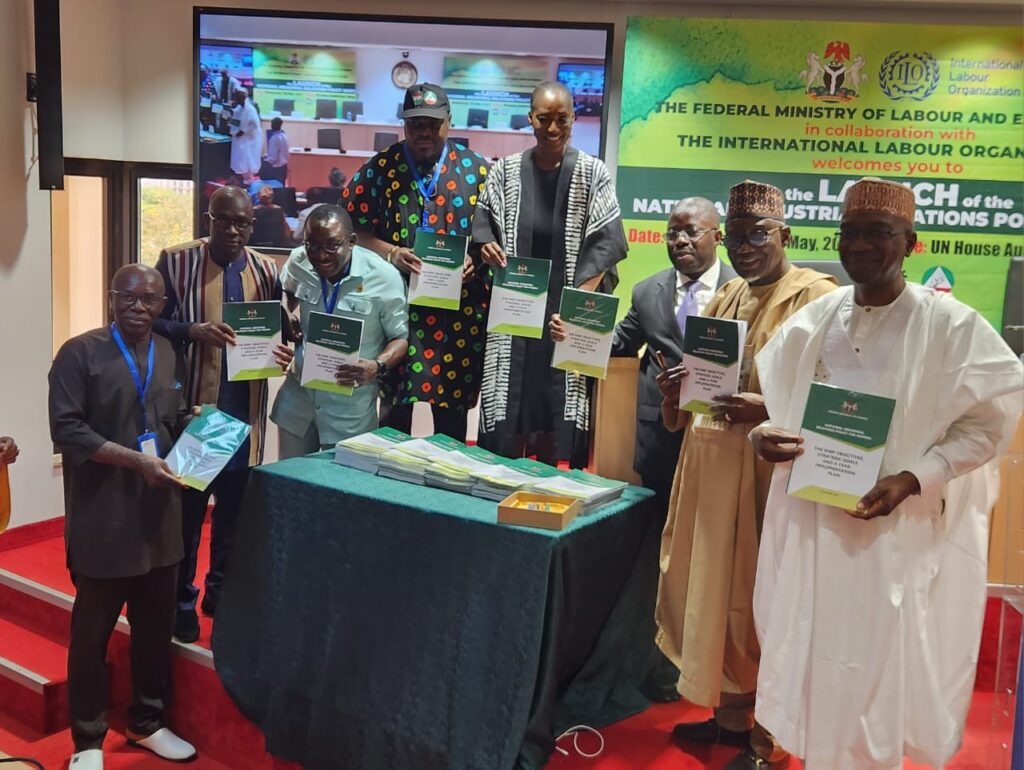
The Federal Government, in collaboration with the International Labour Organisation (ILO), has inaugurated the National Industrial Relations Policy (NIRP) to curb strikes and promote industrial peace in the country.
The Minister of Labour and Employment, Dr Muhammad Dingyadi, said this while inaugurating the policy on Wednesday in Abuja.
The News Agency of Nigeria (NAN) reports that the policy document was also signed by all the tripartite partners.
Dingyadi described the policy as Nigeria’s first comprehensive framework for strengthening industrial harmony, decent work and inclusive economic growth.
According to him, the policy became necessary because Nigeria’s industrial relations system lacked a unified framework despite existing labour laws and conventions.
“Unresolved workplace disputes often escalate unnecessarily, while collective bargaining sometimes becomes confrontational instead of collaborative.
“The policy provides the compass needed to manage workplace relations amid technological changes, insecurity and the growing demand for job-rich economic growth,” he said.
The minister said the policy rests on three pillars: social dialogue, rights at work, and productivity and competitiveness.
He explained that government, employers and workers would operate as equal partners through strengthened labour advisory and sectoral councils.
Dingyadi said the policy reaffirmed workers’ rights, including freedom of association, collective bargaining and elimination of forced labour, child labour and discrimination.
He added that industrial peace must translate into more jobs, improved wages and stronger enterprises.
The minister said the document emerged after six years of consultations involving government, labour unions, employers and other stakeholders.
Dingyadi said government would strengthen labour institutions, establish a National Industrial Relations Observatory, expand labour protection to the informal sector and organise training programmes for labour officers, union leaders and HR managers.
Speaking, Mrs Vanessa Phala-Moyo, ILO Country Director to Nigeria, described the policy as a transformative framework for the future of work in the country.
Phala-Moyo described the establishment of the policy as courageous and visionary amid growing global economic and workplace uncertainties.
“Today, Nigeria sends a strong signal for dialogue, shared responsibility and social cohesion in the world of work.
“This Policy is not imposed from outside. It is nationally owned, inclusive and shaped through dialogue and consensus,” she said.
She commended employers’ and workers’ organisations for their constructive engagement and reaffirmed ILO’s commitment to supporting the implementation, monitoring and evaluation of the policy.