By Joan Nwagwu
The Federal Government (FG) and the International Labour Organisation (ILO) have advanced fresh efforts to eliminate child labour through validation of the National Policy and Action Plan 2026-2030.
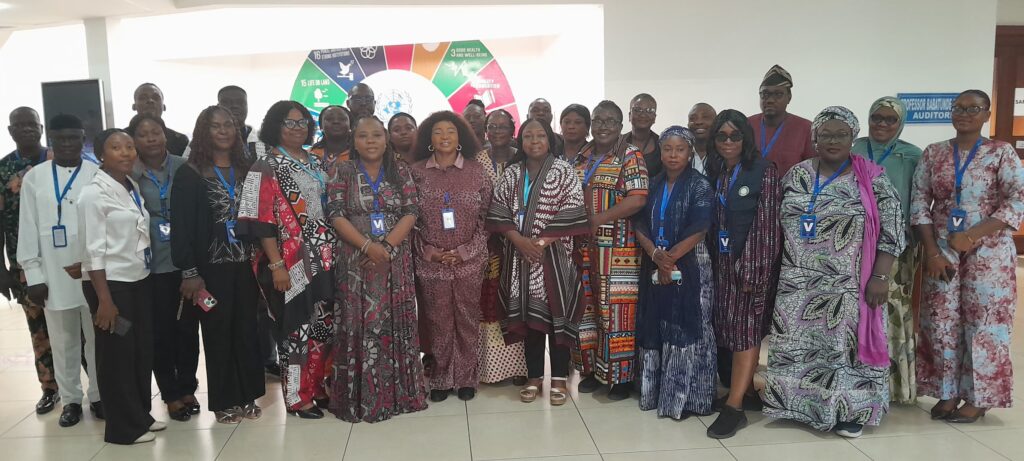
Speaking at the opening of the two-day validation meeting in Abuja, Dr Kamil Ayinde Shoretire,
Permanent Secretary, Federal Ministry of Labour and Employment, described the exercise as a significant milestone.
Shoretire, represented by Mrs Olaolu Olaitan, Director of Inspectorate in the ministry, said the meeting underscored Nigeria’s commitment to protecting children from exploitation and securing a brighter future for coming generations.
He commended the ILO for its sustained technical and financial support to the ministry, saying the partnership had strengthened institutional frameworks, enhanced stakeholder capacity and improved data collection systems nationwide.
“Through our long-standing partnership, we have recorded notable progress in strengthening institutional frameworks, building stakeholder capacity, improving data collection systems and enhancing national awareness on the harmful effects of child labour,” he said.
The permanent secretary said child labour remained a major challenge in Nigeria and globally, depriving millions of children of their fundamental rights to education, health, protection and development.
According to him, findings from the 2022 National Child Labour Survey highlighted the urgent need for stronger interventions and collaboration to address poverty, poor education access and social exclusion.
“The findings underscore the urgent need for stronger interventions, enhanced collaboration among stakeholders and sustained commitments to addressing the root causes of child labour,” he said.
Shoretire said the draft National Policy and National Action Plan were products of extensive consultations involving government institutions, employers, workers’ organisations, civil society groups, academia and development partners.
“The national policy establishes the strategic direction for preventing and eliminating child labour, while the action plan outlines specific actions, responsibilities, timelines, indicators and resource requirements for achieving desired outcomes,” he said.
He added that successful implementation would depend on sustained political commitment, adequate funding, strong coordination mechanisms and effective monitoring systems to ensure lasting change for Nigerian children.
Also speaking, Dr Vanessa Phala, ILO Country Director to Nigeria, commended the Federal Ministry of Labour and Employment, the National Steering Committee and partners for reaching a critical milestone.
She also appreciated the European Union and the Government of the Netherlands for supporting the process through the FMM West Africa II and ACCEL Africa II projects.
“Child labour is a violation of fundamental human rights and compromises children’s future. This reminder reinforces why our work here today is both urgent and essential,” she said.
Phala said the policy, action plan and monitoring framework were informed by the evaluation of previous interventions, the 2022 National Child Labour Survey and international labour standards.
She said the framework emphasised social protection, quality education, labour law enforcement, behavioural change, improved data systems and implementation measures capable of delivering measurable and lasting impact.
Speaking, Ms Ruth Ataguba, consultant and resource person for the development of the National Child Labour Policy, said the draft document was developed through a participatory process involving the National Steering Committee, ILO and the Federal Ministry of Labour and Employment.
She said the new policy addressed emerging challenges, including technology-facilitated child labour, noting that while digital platforms created opportunities for education and development, they also exposed children to exploitation and abuse.
“We have looked into issues such as online facilitation of child labour and labour governance. The document also addresses deceptive recruitment processes and is aligned with the Marrakesh Declaration on emerging child labour challenges,” she said.