Across Yorubaland, the talking drum -such as the piercing gángan, the resonant ìyáàlù, and the stately dùndún alongside the sèkèrè and the human voice, has never been merely an instrument of nocturnal merriment.
Instead, it serves as the unwritten constitution of the masses. Long before modern editorial boards existed, indigenous minstrels and palace griots acted as society’s moral barometer, extolling virtuous leadership with lavish panegyrics while subjecting wayward rulers to biting satire.
When a musician abandons sycophancy and wields rhythm as a scalpel, power trembles.
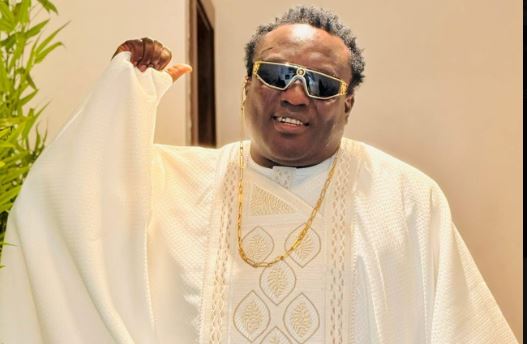
Saheed Osupa’s recent live rendition in Ibadan, anchored on the deceptively playful solfège “Do Mi Mi Re Mi,” stands as a masterclass in how indigenous artistry can indict misgovernance without uttering a single syllable of libel.
To the untrained ear, “Do Mi Mi Re Mi” sounds like a harmless vocal warm-up. Yet, within the tonal architecture of the Yoruba language, those five musical notes mirror the exact pitch contour of a specific political heavyweight in Oyo State.
By substituting a name with musical notation, Osupa bypassed the bluntness of pedestrian insults and opted instead for an intellectual riddle that every listener in Ibadan deciphered instantaneously.
It is a textbook demonstration of Yoruba linguistic dexterity, proving that an artist need not shout from a soapbox to strip an emperor of his garments.
What makes Osupa’s lyrical fusillade truly resonant, however, is not merely its cleverness, but the grave maladministration it exposes.
Beneath the infectious percussion lies a scathing indictment of a governance model defined by the reckless liquidation of our collective patrimony.
Over the past few years, Oyo State has witnessed an alarming propensity to auction off state-owned properties and prime public lands under the convenient guise of urban renewal and privatisation.
Assets painstakingly accumulated by visionary forebears; the very commonwealth meant to anchor future generations have been systematically parcelled out to private interests, leaving the ordinary citizenry impoverished in their own homeland.
Even more troubling is the quiet mortgaging of the state’s economic future. When an administration treats public infrastructure and sovereign resources as disposable chattel to be traded for fleeting liquidity, it saddles unborn citizens with insurmountable debt and depleted opportunities.
Osupa’s lyrics capture the quiet frustration of a populace watching its heritage being converted into private capital. By framing this fiscal recklessness in proverbial folklore, the Fuji maestro elevated a street-level grievance into a permanent historical record; one that cannot be erased by glossy government press releases or paid media spin.
Though critics often argue that entertainers should stay in their lane and leave statecraft to politicians, that is a convenient fallacy peddled by those who fear accountability.
Music, at its finest, is inherently didactic: it teaches civic responsibility, instils moral rectitude, and reminds those in the corridors of power that public office has an expiry date.
The same voice that once serenaded political ambition with hopeful praise reserves the sacred right to sound the alarm when those promises curdle into self-serving opportunism.
Ultimately, “Do Mi Mi Re Mi” is more than a viral concert moment; it is a cultural reckoning. Saheed Osupa has reminded both the governed and the governors that, while political tenure is transient, art is eternal.
Public assets may be sold off behind closed doors, and state resources may be mortgaged, yet no administration can buy the silence of a person whose conscience has found its voice in song.