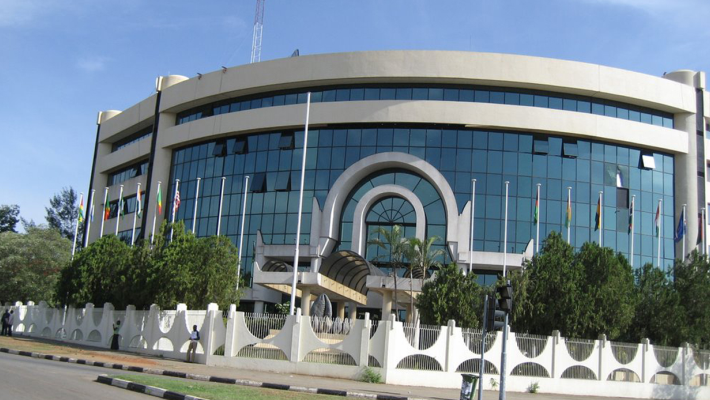
The President of the Economic Community of West African States (ECOWAS) Commission, General Birame Diop, has identified industrialisation, regional value chains and improved access to financing as critical to creating jobs and strengthening West Africa’s competitiveness in the global economy.
Diop said the region must move beyond trade agreements to building industries capable of processing goods, expanding production and generating employment, stressing that economic integration would deliver greater benefits when supported by productive industrial activities.
“Trade agreements do not create jobs; industries do,” he said.
The ECOWAS Commission president spoke at the 32nd Nigerian Economic Summit (NES #32) during a high-level panel discussion on “From Trade to Value Chains: Building Regional Industries to Compete Globally,” with the sub-theme, “Invest Nigeria.”
His statement was delivered on his behalf by the Commissioner for Economic Affairs and Agriculture, Hon. Dehpue Yenpea Zuo.
Diop noted that intra-African trade remained at about 15 per cent, compared with more than 60 per cent in Europe and Asia, highlighting the limited scale of regional industries as a major challenge to trade expansion across the continent.
He maintained that strengthening industrial capacity across West Africa would enable countries in the region to derive greater benefits from economic cooperation and build production networks capable of competing internationally.
According to him, the establishment of regional value chains would help connect producers and manufacturers across countries, creating opportunities to increase production and process more goods within the region.
The ECOWAS president identified the regional market, comprising more than 300 million consumers, as an immediate opportunity for Nigerian manufacturers seeking to expand their businesses.
He said the ECOWAS free trade area could provide Nigerian businesses with a platform to increase production and achieve the scale required to compete in larger markets.
Diop added that manufacturers could use the West African market as a foundation for expansion before competing across the continent under the African Continental Free Trade Area (AfCFTA).
He outlined four priorities for accelerating industrialisation and strengthening regional economic integration.
The first, he said, was the implementation of agreements already reached by member states, beginning with measures at the borders to facilitate trade and improve the movement of goods.
The second priority was the development of regional value chains in sectors where West Africa had competitive advantages.
He also called for the mobilisation of financing that reaches producers operating in the middle stages of value chains, highlighting the importance of ensuring that businesses involved in production could access the resources needed to sustain and expand their activities.
The fourth priority, according to Diop, was to measure the success of regional economic policies by the number of jobs created and the volume of goods processed within West Africa.
His recommendations emphasised the need to assess economic integration by its practical outcomes, particularly its contribution to industrial production, employment and the development of regional industries.
Also speaking at the summit, the Minister of State for Foreign Affairs, Ambassador Sola Enikanolaiye, called for stronger government-private sector partnerships and increased investment in young Nigerians to support the country’s transition from a trading nation to a value-chain economy.
Enikanolaiye reaffirmed the Federal Government’s reordered 4D foreign policy doctrine, which prioritises Demography, Development, Democracy and Diaspora, with national interest defined by the welfare and prosperity of Nigerians.
He stressed that government alone could not mobilise the resources required to achieve shared prosperity, calling for greater collaboration with private businesses and increased mobilisation of domestic and foreign capital.
The minister also identified investment in human capital, small and medium-scale enterprises, technology, innovation and creativity as essential to generating employment and increasing wealth among Nigeria’s youthful population.
He said the country’s foreign policy engagements should support domestic development and bring the Ministry of Foreign Affairs closer to Nigerians.
Enikanolaiye further advocated partnerships involving governments and businesses at national, regional and international levels, noting that cooperation with neighbouring countries, West Africa, the wider African continent and the global community could help develop industries capable of competing internationally.