By Joan Nwagwu
The Federal Government says women empowerment remains essential to industrial transformation and sustainable national development across key sectors of the economy.
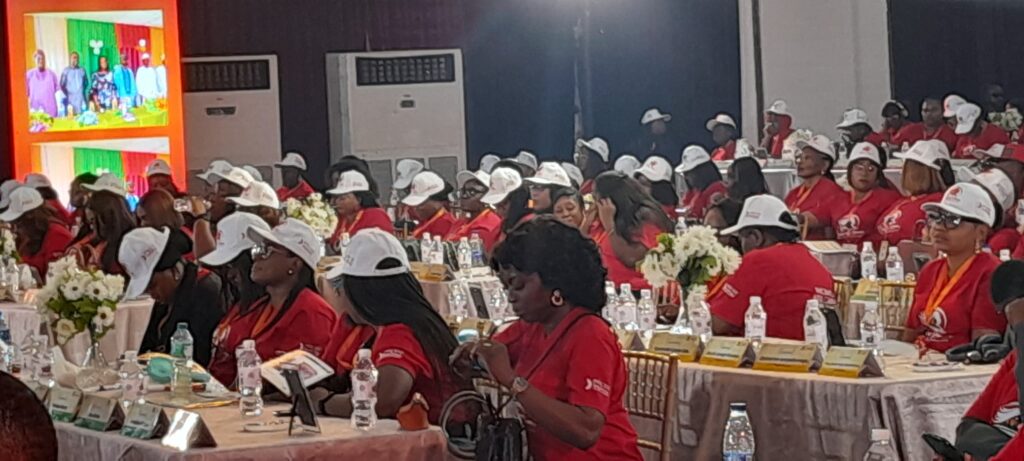
The Minister of Women Affairs and Social Development, Hajiya Imaan Sulaiman-Ibrahim, said this at the third edition of the Petroleum and Natural Gas Senior Staff Association of Nigeria (PENGASSAN) Women Annual Convention on Wednesday in Abuja.
The convention is with the theme: The Dynamic Woman, Sharping Tomorrow; Influence, Impact and Legacy.”
Sulaiman-Ibrahim said focused and united women possess the capacity to shape policies, boost productivity and provide leadership required to secure Nigeria’s economic future, particularly in the energy sector.
She said empowered women were critical drivers of industry transformation and national development across all sectors of the economy.
“Women who are focused and united in purpose possess the capacity to shape policies, boost productivity, and secure Nigeria’s economic future.
“The federal government is committed to people-centred policies that prioritise women, families, and vulnerable groups as catalysts for national development,” she said.
The minister described the convention as timely and strategic, noting that it brought together women operating at the heart of Nigeria’s economy to promote inclusion, innovation and growth.
She disclosed that the federal government had declared 2026 as the “Year of Families and Social Security,” aimed at strengthening social protection systems and improving citizens’ wellbeing.
Sulaiman-Ibrahim called on institutions and stakeholders to align their policies and frameworks with emerging societal realities, particularly in advancing gender inclusion in workplaces.
She emphasised the need to strengthen care systems, workplace policies and leadership opportunities to enhance women’s participation in decision-making processes.
The minister also commended the organisers for providing platforms that support women’s advancement in traditionally male-dominated sectors and urged participants to remain committed to excellence and collaboration.
In her remarks, the Country Director of the International Labour Organisation (ILO), Vanessa Phala-Moyo, called for stronger transformational initiatives to advance women’s progression, particularly in the energy and gas sector.
Phala-Moyo said the engagement offered an opportunity to address structural barriers limiting women’s full participation in key industries.
She noted that although legislative frameworks supporting gender inclusion exist, laws alone were insufficient to guarantee meaningful progress.
According to her, meaningful progress requires strong commitment, leadership, and deliberate action from stakeholders across the sector.
She stressed the need to move beyond surface-level interventions to address fundamental challenges affecting women’s growth and advancement.
She called for practical enforcement mechanisms, compliance with policies, and clear accountability systems that define targets, timelines, and responsibilities.
She added that many women possess untapped skills and capacity that remain underutilised, stressing the need to create enabling environments that allow them to contribute fully.
She urged continued collaboration among stakeholders to ensure that opportunities translate into measurable progress for women in the sector.