By Genesis Ogiri
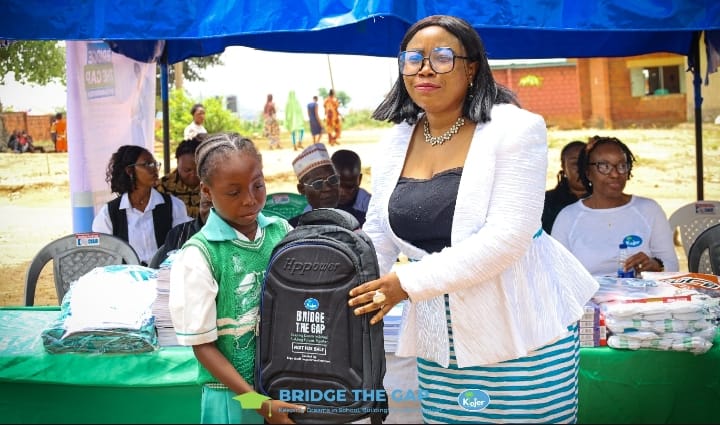
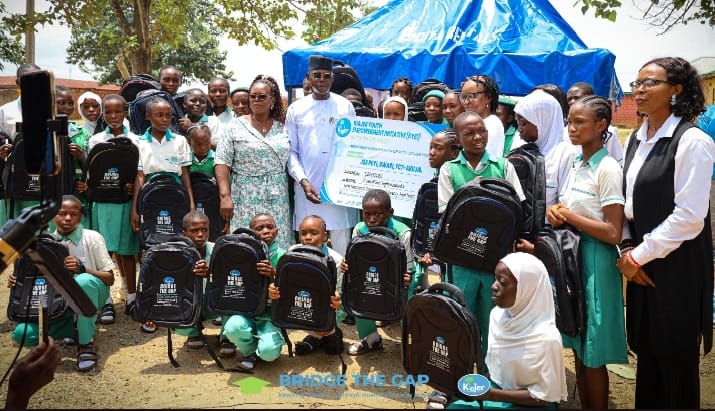
ABUJA — The GESA Initiative and Kiajer Youth Empowerment Initiative have launched Project Bridge the Gap, a community-focused intervention aimed at supporting vulnerable children to remain in school and complete their basic education.
The project was launched during a stakeholders’ engagement held at Junior Secondary School, Peyi, Bwari Area Council, Federal Capital Territory, with representatives of government education agencies, school authorities, parents, traditional and religious leaders, development partners, civil society organisations, private sector representatives, teachers and members of the media in attendance.
Delivering the keynote address, Executive Director of GESA Initiative, Cynthia Ifueko Obazee, said the project addressed a critical challenge confronting Nigeria’s education sector, stressing that education was not a privilege but a fundamental right that should be accessible to every child irrespective of socioeconomic circumstances.
Obazee said poverty, hunger, distance, gender barriers, disability and crises were among the factors preventing vulnerable children from accessing and remaining in school. She warned that when a child drops out, society loses not only a student but a potential professional, entrepreneur, innovator, teacher or future leader.
She called for a deliberate shift from focusing mainly on school enrolment to implementing sustainable retention strategies, noting that vulnerable children, including girls, children with disabilities, orphans and those from low-income families, require targeted support to complete their education.
The GESA Initiative Executive Director charged government with strengthening policy implementation, budgetary commitment and technical support for inclusive education, while urging school leadership to create safe and inclusive learning environments. She also called on parents, School-Based Management Committees, traditional and religious leaders, development partners and communities to take collective responsibility for protecting every child’s right to education.
Obazee disclosed that GESA Initiative, through its SCARTIP ongoing project, would partner with Kaiyer Youth Empowerment Initiative to promote the sustainability of Project Bridge the Gap. She said the partnership would support the establishment of income-generating school garden farming activities within the school premises to help sustain the provision of basic school supplies for vulnerable pupils and students.
She further revealed that mothers of vulnerable children would be supported through training in business and trading activities, including poultry opportunities, as part of efforts to strengthen household income and reduce economic pressures on families. She warned that children should not be left to hawk on the streets during school hours, stressing that communities must work together to ensure that children remain in school.
Obazee commended Kaiyer Youth Empowerment Initiative for launching the project and called on government institutions, organisations, businesses and individuals to emulate the initiative by supporting basic school needs in their communities. She urged stakeholders to make the intervention a sustained commitment, stressing that every child deserves the opportunity to remain in school, complete their education and contribute meaningfully to society.