By Diana Omueza
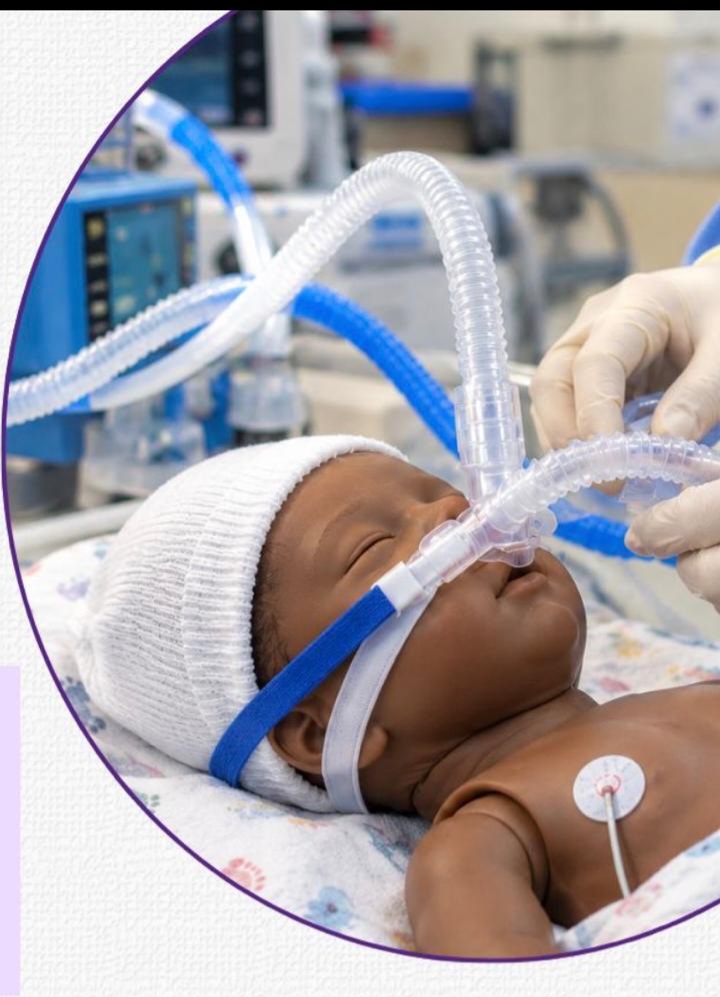
Vayu Global Health Foundation, a Non-Governmental Organisation (NGO), has emphasised the need for wider access to Continuous Positive Airway Pressure (CPAP) therapy to improve premature babies’ survival chances across Africa.
Mr Kennedy Opondo, the foundation’s Africa Director, said this in Abuja during a Training of Trainers (ToT) programme sponsored by Vayu for 40 healthcare workers from 12 hospitals.
The News Agency of Nigeria (NAN) reports that the 2025 United Nations Inter-agency Group for Child Mortality Estimation (UN IGME) report estimated that 1.084 million newborns died in sub-Saharan Africa in 2024.
According to the report, prematurity accounted for 30.4 per cent of neonatal deaths in the region, translating to approximately 330,000 deaths.
In Nigeria, an estimated 295,006 newborns died within their first 28 days of life in 2024, while the Nigeria Demographic and Health Survey put neonatal mortality at 41 deaths per 1,000 live births.
Opondo said CPAP therapy was essential in supporting premature babies’ breathing, adding that the World Health Organization (WHO) recommended the intervention for newborns requiring respiratory support.
He attributed the limited adoption of the technology across Africa to resource constraints, emphasising the need for stronger partnerships to improve access to appropriate newborn care.
“Respiratory care for newborns is very essential, particularly for babies born prematurely. However, limited resources across Africa mean that CPAP therapy is not widely used.
“We want to ensure that every newborn, regardless of the environment in which the baby is delivered, has access to this form of respiratory support,” he said.
Opondo said the foundation was working with government institutions and other partners to improve access to CPAP technology and strengthen its integration into healthcare delivery systems.
He emphasised that government ownership was critical to sustaining the intervention, adding that NGOs could only support efforts towards achieving broader healthcare objectives.
“We see government as the key stakeholder in implementing these interventions. Our responsibility is to support, but ultimately, government must take ownership and integrate CPAP therapy into the healthcare system.
“Other organisations must also work collaboratively rather than operate in silos, as a common goal, coordinated advocacy and shared implementation strategies are essential to achieving sustainable results,” he said.
Opondo said the organisation was considering a hub-and-spoke approach involving healthcare facilities, governments and implementing partners to extend the intervention beyond major hospitals.
He said the strategy would facilitate wider access to neonatal respiratory care, particularly in facilities with limited access to specialised training and equipment.
Dr Christiana Oji-Mmou, Associate Professor of Paediatrics at Dell Medical School, University of Texas at Austin, said the training was designed to equip healthcare workers with skills to improve respiratory care for critically ill newborns.
Oji-Mmou said participants were selected from hospitals in Abuja and neighbouring states, with emphasis on facilities recording high volumes of newborn deliveries.
She explained that the programme targeted key personnel in neonatal units, including neonatologists, paediatricians, neonatal nurses, obstetric nurses and biomedical engineers.
“The essence of the training is to equip these healthcare champions with the appropriate knowledge and skills to return to their respective facilities and step down the training to other healthcare workers.
“We want to ensure that the people directly involved in newborn care understand how to provide the necessary support to critically ill premature and full-term babies.
“They will get to understand the principle of bubble CPAP, its clinical use, assembling and disassembling and care for a neonatal on CPAP,” she said.
She said eight participating hospitals were federal medical centres and teaching hospitals, while four were selected private facilities recording high volumes of newborn deliveries.
She said some private hospitals were also in-vitro fertilisation centres, where multiple pregnancies involving twins and triplets could increase the risk of premature delivery.
Oji-Mmou said biomedical personnel were included because functional equipment was essential to effective neonatal care.
She said the programme was expected to expand beyond Abuja to other states and geopolitical zones, with plans to engage state governments and primary healthcare facilities.
“This is only the beginning of the training. We have participants from Plateau, Nasarawa and Kogi States, but our goal is to take the programme across the country.
“We also want to work with the FCT and state governments to extend the training to secondary healthcare facilities and primary healthcare centres so that more newborns can benefit,” she said.
Ms Fumilayo Adumbi, a Senior Nursing Officer at the Federal Teaching Hospital, Ido-Ekiti, and beneficiary of the programme, described the training as an important development in improving respiratory care for premature babies.
Adumbi said the VAYU CPAP device offered advantages over improvised alternatives, particularly because of its oxygen blender, which combined atmospheric air with oxygen from an external source.
She explained that the technology allowed more controlled oxygen delivery, reducing the risks associated with administering 100 per cent oxygen to newborns.
“The VAYU CPAP is a welcome innovation because it has a blender that combines atmospheric air with oxygen from the oxygen source. This helps to regulate the oxygen concentration delivered to the baby.
“Previously, we relied on improvised CPAP devices, which were not as effective, and there were concerns about giving newborns 100 per cent oxygen, which could be harmful,” she said.
Adumbi said she had used the device in her facility and observed improvements in the condition and outcomes of babies receiving treatment.
She added that its ease of assembly and ability to function without electricity made it particularly useful in healthcare facilities facing power supply challenges.
“I have used it in my facility, and it has helped improve the outcomes of our babies. We have observed positive responses, with reduced complications and better recovery.
“It is also easy to assemble and does not require electricity, making it a practical option for hospitals where reliable power supply remains a challenge,” she said.
The nurse commended the organisers of the training and expressed optimism that wider access to the technology would strengthen newborn care and help reduce neonatal morbidity and mortality.(NAN)