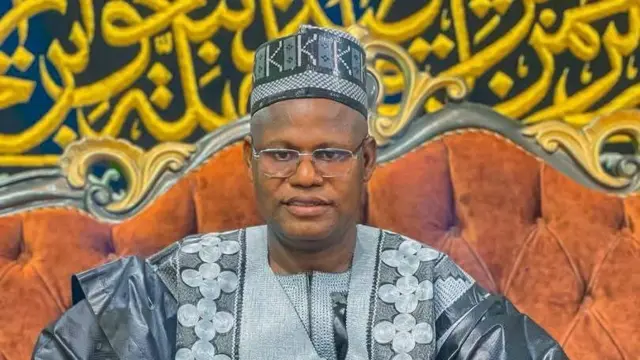
The cold-blooded assassination of Sheikh Yahaya Ibrahim Masussuka in Katsina State, by the Al-Qaeda-affiliated terror group Ansaru, is a grim continuation of a harrowing, decades-long crisis.
Across the globe, Islam is being systematically bastardised, and moderate Muslims have effectively become endangered species. Their sole transgression is choosing a path of moderation, intellectual humility, and peace in the practice of their faith.
In the contemporary socio-political landscape, the moderate Muslim occupies a uniquely perilous position, caught in a vicious crossfire between two distinct forms of prejudice. To many non-Muslims, blinded by fear and broad-brush generalisations following every terrorist atrocity, the moderate is viewed with persistent suspicion and treated as a potential radical hiding behind a veneer of civility.
Conversely, to the religious extremist, the moderate is not merely an adversary but an existential threat. This is due to the fact that moderates actively abhor violence and champion the foundational Quranic decree that there is no compulsion in religion, as stated in Surah Al-Baqarah, Chapter 2, Verse 256, they are despised by radical groups even more intensely than non-Muslims.
This deep-seated animosity reveals a stark, paradoxical reality that terror franchises like Boko Haram, ISIS, and Ansaru have murdered far more Muslims than non-Muslims.
By exploiting sacred Islamic symbols to advance crude political ambitions, these factions routinely brand any Muslim who dissents from their regimental, totalitarian dogma as an infidel.
In their perverted theology, the moderate Muslim is entirely dispensable, and the tragic reality is that Sheikh Masussuka’s name is merely the latest entry in a long, blood-soaked register of Northern Nigeria’s most courageous Islamic intellectuals who paid the ultimate price for refusing to bow to extremism.
The pattern of eliminating religious moderators is both systematic and ruthless, stretching back years.
It includes the brutal 2007 gunning down of Sheikh Ja’afar Mahmud Adam inside his mosque during early morning prayers in Kano after he bravely used his immense influence to critique the nascent radical movements that would eventually birth Boko Haram.
It mirrors the 2010 execution of Sheikh Bashir Mustapha inside his Maiduguri home by sect gunmen just twenty-four hours after a public radio broadcast in which he denounced the violent tenets of extremism, and the 2011 assassination of Sheikh Imam Ahmed in Borno for speaking out directly against the terror group’s tactics in the very epicentre of the insurgency.
It recalls the horrific 2014 ambush of Sheikh Muhammad Awwal Adam Albani in Zaria, who was killed alongside his wife and young son while returning from a preaching session, targeted specifically for his vocal opposition to Boko Haram and his open advocacy for secular education.
Most recently, it echoes the slaughter of Sheikh Mustapha Aliyu Unguwar Mai Kawo, the elderly head of Munazzamatul Fityanul, who was abducted and killed in Katsina State just a short time before Sheikh Masussuka’s assassination.
These systematic killings perfectly illustrate an extremist strategy designed to terrify the moderate majority into absolute capitulation. For decades, public discourse has been trapped in a tedious, cyclical debate over who constitutes a real Muslim or what represents true Islam.
Such arguments are largely academic and entirely futile, as neither the hardened extremist nor the deeply principled moderate is going to budge from their core convictions.
The critical imperative now is not theological validation but strategic victory. Moderate Muslims must focus their energies entirely on winning the war, encompassing both the physical confrontation against insurgent forces and the ideological battle to reclaim the hearts, minds, and souls of the global Muslim population.
Admittedly, concepts like peace and justice are highly subjective, interpreted through vastly different cultural, philosophical, and religious frameworks, meaning that what signifies peace to a pacifist may look entirely different to an international relations realist.
The tragic losses of voices from Sheikh Ja’afar to Sheikh Masussuka underscore the immense cost of neutrality or passivity. If the moderate majority remains silent, allowing extremists to monopolise the narrative of Islam, the cycle of bloodshed will continue unabated.
The battle for the soul of the faith will not be won by trying to convince the radicals of their errors, but by robustly defending, protecting, and amplifying the voices of moderation before they are silenced entirely.