By Joan Nwagwu
The Vice-President, Sen. Kashim Shettima, has urged the private sector to leverage ongoing economic reforms to drive enterprise competitiveness, create jobs and promote inclusive economic growth across Nigeria.
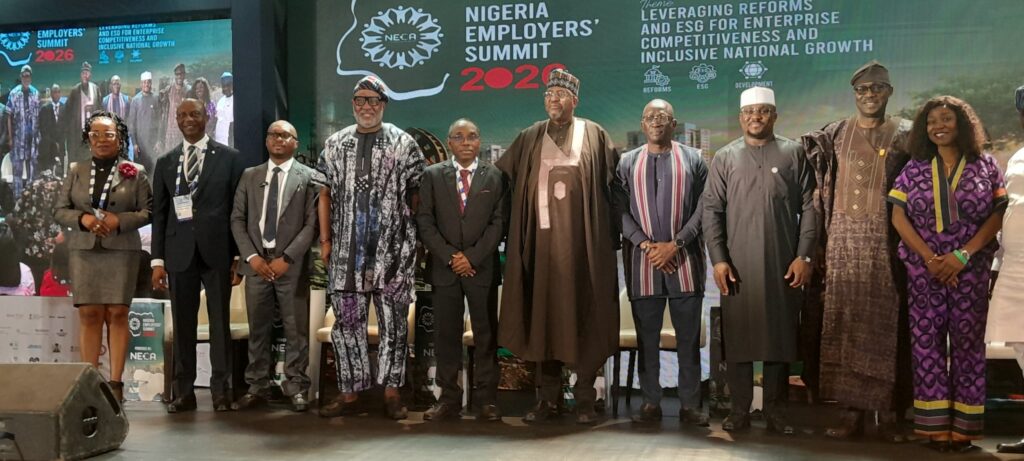
Shettima made the call in a keynote address at the two-day Nigeria Employers’ Summit 2026 on Monday in Abuja.
The summit, in its fifth edition, was organised by the Nigeria Employers’ Consultative Association (NECA) with the theme: “Leveraging Reforms and ESG for Enterprise Competitiveness and Inclusive National Growth.”
Shettima was represented by Dr Aliyu-Modibbo Umar, Special Adviser on General Duties to the President, Office of the Vice President.
He said the Renewed Hope Agenda was addressing long-standing structural challenges through bold reforms aimed at restoring macroeconomic stability and improving the business environment.
According to him, government alone cannot build prosperity, emphasising that the private sector must drive investment, job creation and innovation for sustainable economic growth.
“The reforms have been difficult, but their purpose is to correct the foundations so that growth becomes real, durable and inclusive,” Shettima said.
He said reforms in taxation, foreign exchange, energy and infrastructure were designed to reduce production costs, remove bottlenecks and improve Nigeria’s competitiveness globally.
“The private sector cannot compete on sentiment. It competes on functional infrastructure, predictable policies, fair taxation and reliable energy,” he said.
In his welcome remarks, NECA President, Mr Ifeanyi Okoye, said the summit came at a critical time in Nigeria’s economic transformation following reforms aimed at long-term competitiveness.
Okoye, who was represented by Mr Richard Ayibiowu, Treasurer of the association, said employers acknowledged government reforms but emphasised the need to measure their impact on enterprise growth and welfare.
“Three years into this reform journey, it is both timely and necessary to evaluate how these policies have influenced enterprise growth, employment generation, investment, productivity, competitiveness and overall economic welfare,” he said.
He said businesses were still grappling with high energy costs, inflation, exchange rate volatility, multiple taxation, infrastructure deficits and logistics constraints, especially affecting MSMEs.
Okoye said the summit would assess reform progress, address challenges and inaugurate an ESG Implementation Guide for MSMEs developed with the International Labour Organisation to strengthen business sustainability.