By Temitope Ejimokun/Joan Nwagwu
Dr Omolola Olarinde-Olomola, a lecturer at Elizade University, Ilara-Mokin, says weak labour protection systems are fueling unfair recruitment practices and exploitation of Nigerian migrant workers across global labour markets.
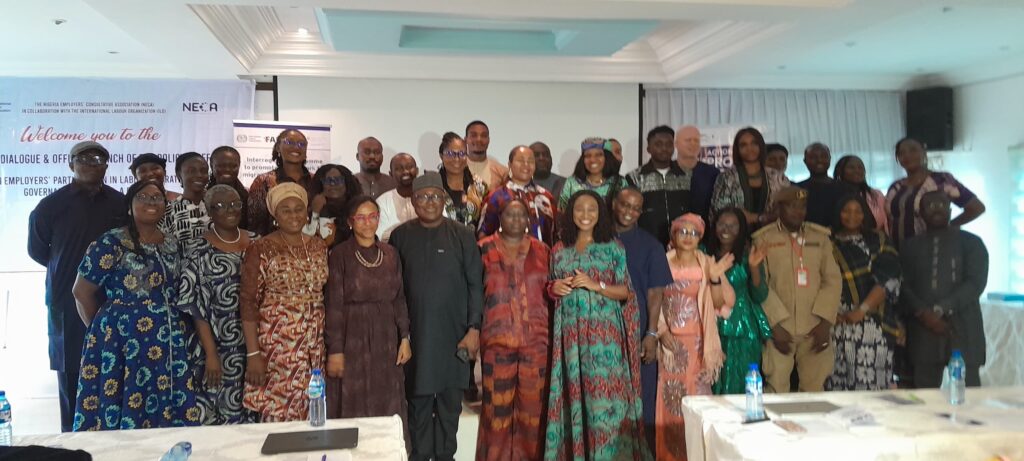
She said this on Friday in Abuja at the Policy Dialogue and Inauguration of the Policy Brief on Employer Participation in Labour Migration Governance in Nigeria.
The event was organised by Nigerian Employers’ Consultative Association(NECA) in collaboration with the International Labour Organisation(ILO) to strengthen labour migration governance and improve migrant workers’ protection systems nationwide.
Presenting her findings and recommendations of the policy brief at the event, Olarinde-Olomola said many Nigerians migrate abroad seeking decent employment opportunities and better livelihoods.
According to her, employers across various sectors continue demanding skilled labour from developing countries, shaping migration flows driven by economic survival and global labour demand.
“These dynamics are influenced by unemployment, poor working conditions, and increasing demand for skilled workers in international labour markets across destination countries.
“Nigeria’s labour market remains largely informal, with many employment arrangements lacking contractual protection, social benefits and workplace safety guarantees for workers nationwide.
“These conditions expose migrant workers to exploitation, unfair recruitment practices and poor working conditions within destination labour markets,” she said.
She said inconsistencies between workers’ skills and labour market demands have contributed to poor migration outcomes, including underemployment, skills mismatch and unfair recruitment processes.
According to her, such gaps also weaken labour protection mechanisms for migrants and reduce opportunities for decent work across both local and international labour markets.
Olarinde-Olomola said the study also examined employers’ engagement in labour migration governance through interviews, policy reviews and stakeholder consultations across relevant institutions.
She noted that the aim was to generate evidence for inclusive, fair and gender-responsive migration systems capable of improving governance outcomes in Nigeria.
She identified NECA as a major stakeholder influencing policy coordination, social dialogue and labour migration advocacy within Nigeria and internationally.
She, however, said the challenges included weak cross-border cooperation, irregular monitoring systems, poor enforcement at migration exit points and unregistered private recruitment agencies operating in the labour market.
“There are still significant challenges with weak cross-border cooperation and poor enforcement of migration procedures at exit points.
“The activities of unregistered private recruitment agencies continue to undermine labour migration governance and migrant protection efforts in Nigeria,” she added.
Olarinde-Olomola therefore recommended stronger inter-agency coordination, improved regulation of recruitment agencies, enhanced migrant tracking systems and wider stakeholders’ participation in migration governance.
She also called for gender-responsive migration policies, sustainable financing mechanisms and improved grievance redress systems to strengthen labour migration governance nationwide.