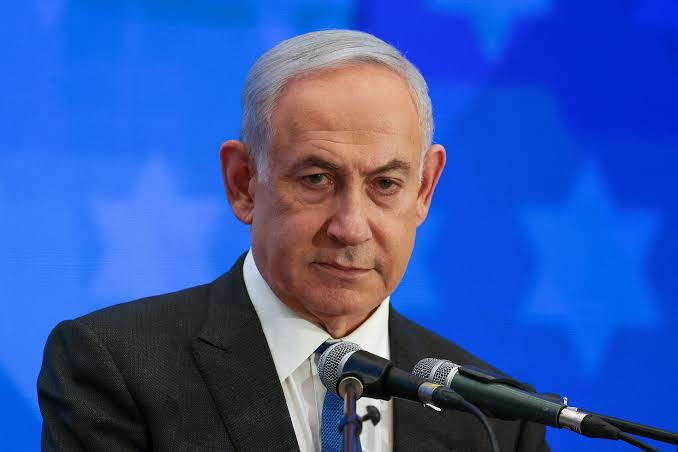
Benjamin Netanyahu has long prided himself on being the indispensable man of Israeli politics. For over seventeen years across non-consecutive terms; making him the longest-serving prime minister in the nation’s history.
Netanyahu has masterfully manipulated the levers of power, outmanoeuvred rivals, and rewritten the rules of political endurance. To his staunch supporters, he was “King Bibi,” the consummate diplomat and security hawk who alone could shield Israel from a hostile world.
Yet, following the seismic general election on 27 October, that carefully cultivated aura of invincibility has finally shattered. By failing to secure a governing majority, Netanyahu now faces an unprecedentedly perilous political future.
The architects of his downfall are not just his traditional centrist opponents, but a profound domestic reckoning and a historic mobilisation of the country’s Palestinian-Israeli electorate. For a man who built his career on fracturing his opposition, the ultimate irony is that his own divisive tactics have paved the way for a potentially historic coalition that could permanently unseat him.
The primary catalyst for Netanyahu’s collapse is the catastrophic security and intelligence failure of 7 October 2023. For over a decade, his central compact with the Israeli public was simple: he would guarantee security while managing the Palestinian conflict through a policy of containment.
That illusion died in blood and ash. To a vast cross-section of the Israeli public, Netanyahu’s refusal to accept personal accountability for the lapses, combined with his apparent prioritisation of his own political survival over the return of hostages, transformed him from a protector into a liability.
The election became, first and foremost, a searing referendum on his legacy.
Compounding this domestic fury was an unprecedented tectonic shift in voter demographics. Historically, Palestinian-Israeli parties operated on the periphery of the Knesset, hampered by low voter turnout and systemic political isolation.
However, galvanised by deep-seated resentment against the inflammatory rhetoric of Netanyahu’s far-right coalition partners, Arab citizens mobilised in record numbers, yielding an unprecedented 19 seats. Coupled with a massive influx of expatriate Israelis flying home explicitly to vote against the incumbent government, the anti-Netanyahu sentiment reached a crescendo that his traditional right-wing base could not offset.
Beyond Israel’s borders, Netanyahu’s standing had already degraded from a respected, albeit divisive, statesman into a deeply polarising pariah. While he maintained a transactional lifeline with certain Western allies, his prosecution of the war in Gaza alienated vast swaths of the international community.
The staggering civilian death toll, the displacement of millions, and widespread allegations of atrocities committed in the enclave systematically eroded Israel’s international standing and strained traditional alliances to breaking point.
Globally, he is increasingly viewed not as a defender of a democratic state, but as an autocrat willing to incur immense humanitarian and diplomatic costs to stave off his own pending corruption trials.
The path forward for Israel is fraught with immense complexity. The main opposition bloc, led by Gadi Eisenkot, holds 48 seats. To reach the coveted 61-seat majority to govern, they must bridge deep ideological chasms and form an alliance with the 19 seats held by the Arab-led parties.
In the hyper -fractionalised arena of Israeli politics, such an alliance breaks a foundational taboo and will require tortuous negotiation.
Yet, the mathematical reality is unyielding: together, they hold 67 seats- more than enough to dismantle the Netanyahu era.
Whether this disparate coalition can cohere remains to be seen, but the mere fact of its viability signals that Netanyahu’s grip on power has never been more tenuous. The ultimate political survivor has run out of space to manoeuvre.