By Joan Nwagwu
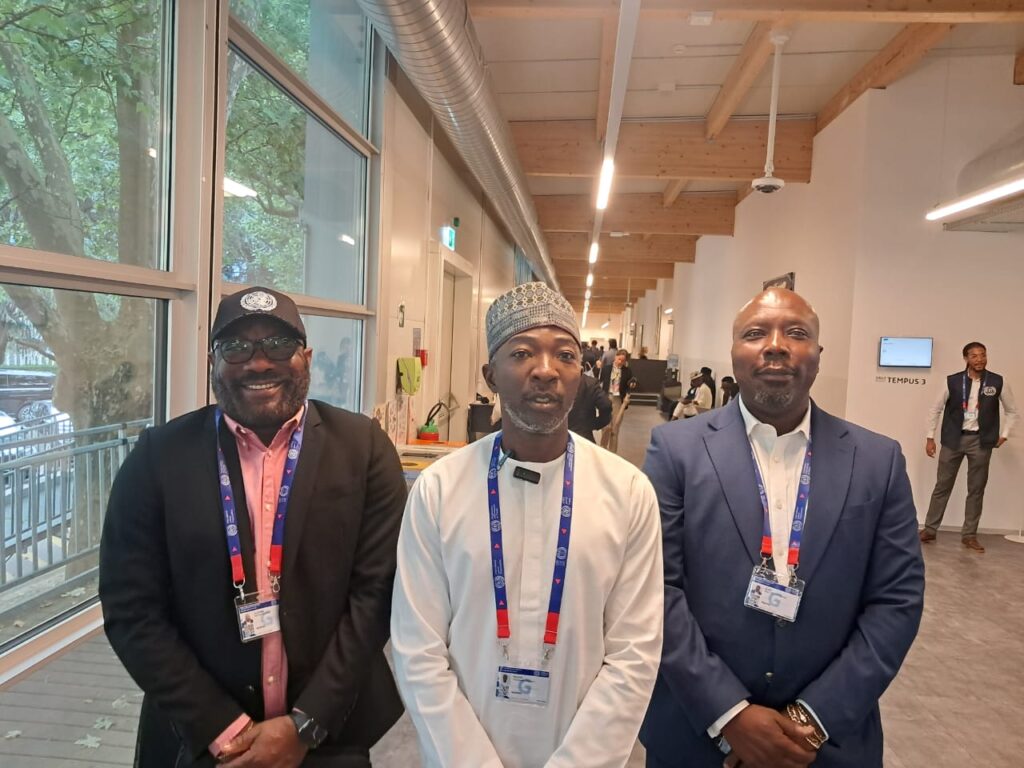
The Managing Director of the Nigeria Social Insurance Trust Fund (NSITF), Mr Oluwaseun Faleye, has stressed the need for inclusive protection of workers as digital technologies continue to reshape the world of work.
Faleye said this on Thursday while responding to questions after Nigeria’s presentation at the 114th Session of the International Labour Conference (ILC) in Geneva, Switzerland, on emerging workplace realities and artificial intelligence (AI).
It would be recalled that the Minister of Labour and Employment, Dr Muhammad Dingyadi, had called for inclusive and human-centred AI policies that protect jobs, workers’ rights and promote decent work opportunities.
This was contained in a statement signed by the Head of Corporate Affairs, Ms Alexander Mede in the Fund.
Faleye while commending the minister’s presentation, described it as a robust response to emerging labour issues, particularly the growing impact of AI on workers and workplaces globally.
“I think it is a very robust response, particularly as it deals with emerging issues in the place of work generally. Key issues include platform workers, the gig economy and AI,” he said.
Faleye said platform workers and the gig economy had become priority areas for the Fund as it seeks to adapt its mandate to evolving workplace realities.
According to him, governments and institutions must understand the implications of AI on workers and workplaces to develop appropriate responses and policies that address emerging labour challenges.
“AI is here to stay, and the more governments and institutions like ours understand its implications on workers and workplaces, the better positioned we are to provide solutions,” he said.
He said the changing nature of work had expanded beyond traditional workplaces, with increasing numbers of people working remotely or through digital platforms and technology-driven arrangements.
Faleye said the development required labour institutions to redefine workplace realities and determine appropriate measures for assessing workers’ contributions, rights, welfare and social protection requirements.
“Recent innovations now entail people working from home and on platforms. There is a need to define appropriate measures to assess their role and impact,” he said.
The NSITF boss said the Fund was examining how best to situate its mandate within evolving work arrangements, particularly concerning compensation and protection for platform-based workers nationwide.
He explained that one of the major challenges involved determining when workplace injuries occur and identifying what constitutes a workplace within the platform workers’ ecosystem.
“It is important to fashion out ways of engaging them, assess contributions and provide compensation for workplace injuries. We are grappling with where the workplace begins and ends,” he said.
Faleye said engagement with stakeholders at forums such as the ILC would help shape policies and practical solutions for addressing emerging workplace concerns in the digital economy.
He also commended President Bola Tinubu for establishing the Ministry of Communications, Innovation and Digital Economy, describing the initiative as critical to driving innovation and digital transformation.
According to him, Nigeria cannot afford to lag behind in digital innovations shaping business activities, public service delivery and workplace practices across economies worldwide.
“You see that we need a central ministry that can coordinate all of this within the public service, and for me, it is a step in the right direction,” he said.