Oyo State now finds itself at a perilous crossroads. In the aftermath of the killing of a teacher and the abduction of a principal, two vice-principals, three teachers and several pupils from LA Primary School and Community Grammar School in Ahoro‑Esinele Community in Oriire LGA, the state can no longer tolerate the theatre of grand pronouncements unaccompanied by swift, practicable security measures.
The national park where security agencies say the bandits have been contained is vast, porous, and susceptible; what it requires is nimble intelligence, rapid response, and pragmatic technology.
In this context, surveillance drones are considerably more sensible than costly manned aircraft, which have yet to become operational.
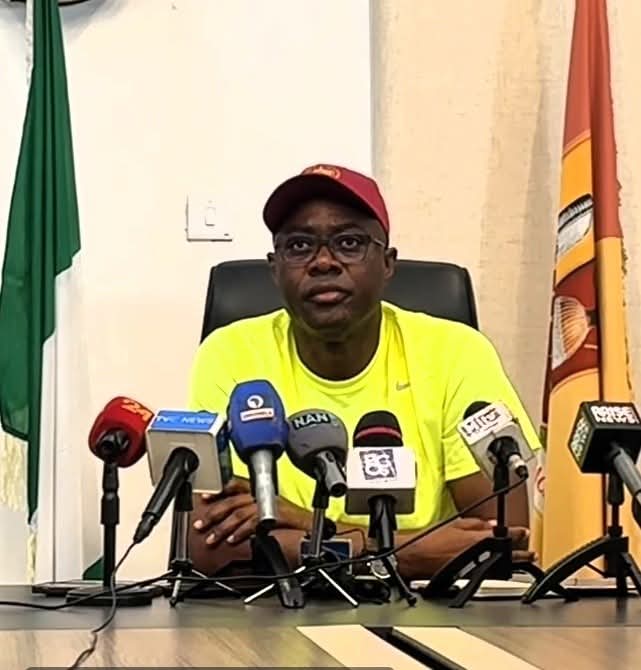
Governor Seyi Makinde has stated that surveillance aircraft were procured in July 2025, yet almost a year on, they remain non‑operational.
That delay has rightly prompted public concern, especially amid reports that the aircraft are still being assembled in Lagos. Whatever the explanation, the optics are poor. In security matters, time is not a luxury. It is frequently the difference between rescue and tragedy.
A state under siege cannot be expected to wait indefinitely for aircraft to enter service while kidnappers traverse forests and isolated settlements with impunity.
A government genuinely committed to security would have given serious consideration to drones. The case for them is both fiscal and operational. Drones are relatively inexpensive to purchase, deploy, and maintain. They can be launched swiftly, hover over difficult terrain, relay live footage, and furnish tactical units with immediate intelligence.
Manned surveillance aircraft, by contrast, demand far greater capital outlay, complex logistics, specialised maintenance, aircrew, fuel, hangarage, and ongoing technical support.
For a state contending with multiple security pressures, it is hard to justify heavy expenditure on equipment that is slow to deliver value when lower‑cost alternatives can perform essential reconnaissance with greater flexibility.
To Governor Makinde, this is not merely a technological matter; it is one of judgement. Oyo’s forests and border communities require tools that can be deployed rapidly, replaced easily, and scaled across multiple flashpoints. Drones meet that brief far better than cumbersome aircraft programmes that appear to live longer in press statements than in the field.
If the state is serious about protecting teachers, pupils, farmers, traders, and commuters, it must invest in what works now, not in what merely sounds impressive in procurement rhetoric.
Oyo’s security failings cannot be divorced from its recent history. The state has endured recurrent episodes of herdsmen‑related violence, rural attacks, and bandit incursions that have unsettled communities and eroded confidence in public protection. These are not isolated shocks; they form part of a longer pattern of insecurity that has been addressed too timidly and too slowly.
When a state witnesses bloodshed in one locality after another, decisive prevention ought to become routine, not optional.
The broader regional threat is equally disquieting. Bandits, driven by sustained military pressure elsewhere, are drifting towards the South‑West, and a large, geographically diverse state like Oyo is particularly exposed. With its forests, highways, farms, and scattered settlements, it offers concealment and mobility to criminal gangs.
That is why the state should adopt a layered approach: drones for surveillance, ground forces for interdiction, community intelligence for early warning, and a permanent security presence along vulnerable corridors.
Anything less is administrative complacency masquerading as a strategy.
What Oyo needs now is urgent resolve. It requires a security architecture founded on speed, visibility, coordination, and accountability. The state must cease treating insecurity as a matter of public relations and begin treating it as the emergency it is.
Above all, it needs leadership that appreciates that, in today’s conflict environment, intelligence gathered in real time is worth more than expensive hardware that arrives late and underperforms.
Drones are not a panacea, but they are a practical option. In a terrain such as Oyo’s, practicality should prevail over prestige.
The people deserve protection that is immediate, intelligent, and effective — not security by announcement.